What is PRP Therapy for Hair Fall?
PRP for hair fall is a treatment that uses your own blood to help with hair loss. PRP stands for Platelet-Rich Plasma. Doctors use this therapy to boost hair growth in people with thinning hair. Many people choose PRP because it is natural and uses your body’s own healing power.
How Does PRP Work for Hair Loss?
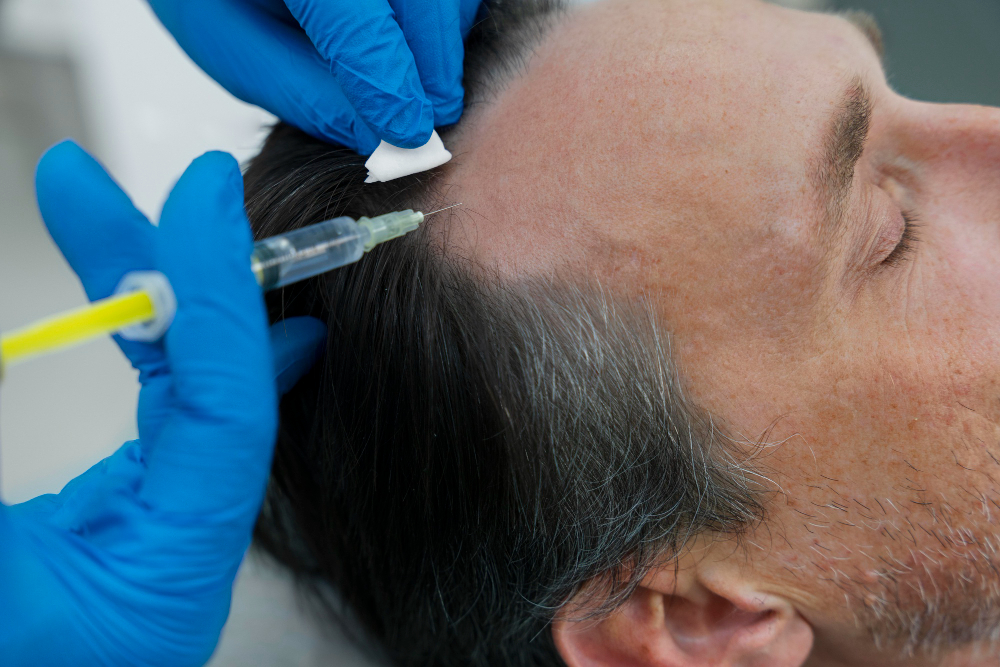
First, doctors take a small amount of your blood. Then, they spin it in a machine to separate the platelets. These platelets are rich in growth factors. Next, the doctor injects this plasma into your scalp. As a result, the growth factors help wake up hair roots and support new hair growth. Over time, many people notice thicker and stronger hair.
Benefits of PRP for Hair Fall
PRP hair treatment offers several benefits. For example, it is a safe and simple procedure. In addition, it uses your own blood, so there is little risk of allergies. Here are some key benefits:
Step-by-Step PRP Procedure for Hair Loss
The PRP procedure for hair loss is easy and quick. Usually, it takes about one hour. Here is what you can expect:
Expected Results and Timeline
Most people need three to four PRP sessions, spaced about a month apart. After the first few treatments, you may notice less hair fall. However, new hair growth usually appears after three to six months. For best results, doctors may suggest follow-up sessions every six to twelve months. Results can vary, but many people see thicker and fuller hair over time.
Potential Side Effects and Safety
PRP for hair fall is generally safe. Since it uses your own blood, the risk of infection or allergy is low. Still, some people may have mild side effects, such as:
Usually, these side effects go away within a few days. If you have concerns, talk to your doctor right away.
Who is an Ideal Candidate?
Not everyone is a good fit for PRP hair treatment. For example, people with early hair thinning often get the best results. You may be a good candidate if you:
However, people with certain medical conditions should avoid PRP. Always check with a certified doctor before starting treatment.
Tips for Maximizing PRP Results
To get the most from PRP for hair fall, follow these tips:
Frequently Asked Questions (FAQs)
Is PRP effective for hair regrowth?
Many studies show that PRP can help with hair regrowth, especially in early hair loss. However, results may vary from person to person.
How long does each PRP session take?
Each session usually takes about one hour. You can return to daily activities soon after.
Are the results permanent?
PRP results are not permanent. For lasting effects, you may need maintenance sessions every few months.
Is PRP painful?
Most people feel only mild discomfort. Doctors use numbing cream to make the process easier.
Reliable Sources and References
For personalized advice on PRP for hair fall, consult a certified cosmetologist Dr.Nikita Dhawan.